Monday, 9 April 2012

Why are the effects of natural hazards generally less harmful in HICs than in LICs?

Why are the effects of natural hazards generally less harmful in HICs than in LICs?


Preparation and prediction in HICs are usually better than in LICs thus the effects are less harmful. HICs are generally wealthier thus they can afford better prediction technology. For example, USA has top-notch satellite technology that feeds back to the National Hurricane Centre in Miami. This allows them to check the weather and satellite images to see if there is a hurricane forming; or to see if there is a possibility of a hurricane forming (for example if the ocean is at 27˚C). If one is forming, they can send out a warning to people at least 24-hours in advance. In LICs such as Bangladesh, they can’t afford such technology thus their citizens don’t have much time to prepare to evacuate-leading to more injuries and deaths. Japan is another example of a wealthy country that has good prediction equipment albeit for earthquakes.

Preparation in HICs is much better in several ways. Firstly, the warning systems are much better. For example in Florida, there are sirens, messages sent to mobile phones as well as news broadcasted via the radio, internet and television. This is much more effective than in LICs such as in Bangladesh where megaphones are used. A person cycles through the farms and city yelling out warnings through a megaphone. This is ineffective as there is a chance that many people won’t hear them. Also, many people in Bangladesh had no idea how bad the cyclone was going to be, and they did not know how to prepare. (Some did not believe the warnings.)
Moreover, their housing was of poor quality, so they did not need to strengthen it whereas in Florida people boarded up their windows. Furthermore, they had nowhere else to go for lack of hurricane shelters, and there was no transportation they could take. Thus they stayed at home. This resulted in more deaths as their houses may collapse on them, or they would be swept by the storm surge as they remained in low lying areas. (Due to lack of education in LICs, many people did not know the after effects of some natural disasters. For example, in Bangladesh, many people did not know about the storm surge that could flood areas and drown people. They also did not know about the eye of the storm, where it is calm. So they go outside to survey the damage only to be swept up by the hurricane when the eye passes. In other LICs prone to earthquakes, some people may not know about the aftershocks that could be quite high on the Richter scale too.)

Another reason why effects are less severe in HICs is they have stockpiles of food and water. These are kept in the shelters built in case of emergencies. (For example, in Florida, there are elevated shelters built along the coastline for people living near the coast to protect them from the storm surge.) In LICs, there isn’t as much food surplus so people can’t store cans of food; nor do they have the money to do so anyway. One effect of natural disasters in LICs is starvation and disease spreading. The water sources like reservoirs are contaminated, often with cholera, and people drinking it get sick and spread the disease. Agriculture is important in LICs, and with the crops destroyed by the disaster the people have no food to eat. Many people die of starvation. On the contrary, in HICs, people can still survive with stockpiles of canned food and water prepared beforehand.


There are less deaths in HICs because the people are well prepared. They have constant drills and practices so that they know what to do when an emergency occurs. For example in Japan, all the schools have frequent earthquake drills where people practice evacuating or hiding beside tables. In Florida, there are even evacuation routes and road signs directing people to safe areas. In LICs, the transportation system is less organised and there aren’t any safe places for people to evacuate to. Also, the infrastructure is weak leading to bridges and highways collapsing. This could injure a lot of people. Traffic lights also cease to function, hence leading to traffic jams-so even if people want to evacuate, they would be stuck. In HICs, there are buildings designed to be resistant against natural disasters. For example, the Taipei 101 in Taiwan is designed to be earthquake-resistant. It has a tuned mass damper that swings in the opposite direction the building does in an earthquake to prevent it from collapsing. In Japan, buildings have to comply with regulations to make it earthquake resistant so that less people are harmed by falling debris from collapsing buildings.

The responses in HICs really help reduce the effect of natural hazards. Short-term responses such as rescue teams (firefighters, search and rescue teams, ambulances etc) have had regular training thus they know what to do. They won’t panic, they have the transport to get to places in need of help, and they also have sufficient equipment. This is good because they can save a lot more people if they are well prepared. In LICs, training, transport and equipment need a lot of money and so they cannot afford it. The response is sluggish and poor as people are momentarily dazed and do not know what to do. For example, in Bangladesh, the rescue teams did not have enough medical equipment and they did not have enough simple things like plasters. They did not have torches or blankets to provide people with comfort and many people died without sufficient aid and medical treatment. In HICs, there were backup electricity and water sources so people were able to live quite comfortably. They also set about to repair any damaged telephone lines so that people could contact family. This reduced any trauma people suffered as they felt more secure and they knew their family was informed.

The long term responses in HICs such as rebuilding any collapsed infrastructure and housing was much better as they could afford to do so. HICs such as Japan and Florida managed to rebuild most of the buildings, transport infrastructure and housing units within a decade of the disaster. They also improved building designs to make it more resistant. In LICs such as Philippines, there are still people displaced from the Mount Pinatubo eruption as the country does not have the money to rebuild all the houses. They also don’t have money to build it well. Many people still have to live in temporary housing with poor facilities. The resettling of people in LICs is not effective and it is often very slow. LICs such as Bangladesh and Philippines are interdependent, they have to rely on other countries to give them financial aid and more.


Thursday, 5 April 2012

Kobe Earthquake, 1995


Based on my own research, some data could be different to what you find.. 

Case Study of the Management of a Tectonic Event in an HIC: Kobe Earthquake, 1995


Intro facts: Cause of the earthquake:
  • The earthquake was caused by the Philippines Plate being subducted under the Eurasian Plate.
  • The focus was very shallow; it was only about 15km.
  • The epicentre was very close to Kobe, around 20km away.

Intro facts: Short term impacts of the earthquake
  • Nearly 200,000 buildings were destroyed.
  • A 1km stretch of the elevated Hanshin Expressway collapsed.
  • 120 of the 150 quays in the port of Kobe were destroyed.
  • Electricity, gas and water supplies were disrupted.
  • Fires caused by broken pipes and ruptured electricity lines, swept the city.
  • An estimated 230,000 people were made homeless.
  • The number of deaths was put officially at 5500.
  • At lest 40,000 people suffered serious injury.

How Was The Earthquake Disaster Managed?

Before the earthquake: Prediction
  • The Japanese government established the Imperial Earthquake Investigation Committee in 1892 in response to the Nobi earthquake (1891) which caused significant damage in Japan. However, they failed to predict the Great Hanshin Earthquake.
  • Even though Japan has one of the most advance Earthquake prediction systems, they failed to predict it. Kobe had not had a major earthquake for more than 400 years so there was less prediction equipment there than in other areas of Japan.
  • Although people on duty could see that there were many tremors (prior to the earthquake), they did not raise the alarm. It could be that they were getting complacent because they had not received a huge earthquake for a long time.
Before the earthquake: Preparation 
-        Illusion of preparedness made people complacent-caught unaware.
-        There were still many old, traditional houses in Kobe. They had heavy tiles on the roofs to withstand typhoons; but they injured many people when the wood supporting the roof collapsed.
-        Most new buildings built had been designed to be earthquake proof; but because of liquefaction, they still toppled over. The houses were not retrofitted, resulting in many elderly people injured.  Transport infrastructure not retrofitted either.
-        They didn’t have sufficient emergency supplies. Especially water-couldn’t fight fire efficiently.
+        Schools and factories had regular earthquake drills.
After the earthquake: Response In The Short Term
·         They had to get clean, fresh water from other parts of the country.
·         The Japanese government evacuated people into temporary shelters because they still faced the dangers of fires and unstable buildings. The government was criticized for being so slow in mobilizing the army-sluggish response.
·         Bulldozers were brought in to clear fallen buildings.
·         The local fire department put out the fires.
·         Civilians helped to rescue others who were trapped.
·         Medical aid centres were set up.
After the earthquake: Response In The Medium & Long Term
  • By January 1999, 134,000 housing units had been constructed. All homes and buildings had to be built to strict regulations and they were made more earthquake resistant. (Flexible frames, steel support.)
  • Water, electricity, gas and telephone services were fully working by July 1995.
  • Within a year, 80% of the port was working but the Hanshin Expressway was still closed.
  • The railways were back in service by August 1995.
  • More instruments were installed in the area to monitor seismic activity.
  • Major transport routes were reinforced so they do not get destroyed or damaged in the event of another major earthquake.
  • Earthquake resistant shelters were constructed in local parks.
  • The city plan was more spaced out, buildings were further apart so that if one collapsed, it would not create a domino effect. Buildings were not allowed to be built on unstable land.
  • Developed more open space in the city so that people had a large area to evacuate to.
  • Japan refused international aid for a while then finally let them in.


Wednesday, 4 April 2012

Case Study of Impacts of a Tropical Storm in an HIC

Note: this is based on my own research and 'fact's are different from site to site..so it could be different from what you find! 
http://www.nhc.noaa.gov/1992andrew.html

What Are The Impacts Of A Tropical Storm In An HIC?
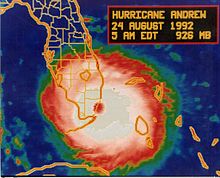
Case Study: Hurricane Andrew - Florida, USA (August 1992)

Fact File
Date: 24th August 1992
Category: 4
Ocean it formed in: Eastern Atlantic
Direction it came from: Travelled in West & Northwest direction- headed                               towards the Lesser Antilles
Name of a city affected: Florida
Wind speed: 240km/h (150 mph)
Storm surge: 5 metres

Effects
Deaths: 30
Injuries: hundreds seriously injured
Cost of damage: Total cost estimated over ₤50 billion, Insurance claims in excess of ₤12 billion
No. of homes destroyed: 25,000 homes destroyed, 100,000 badly damaged
Number of homeless: 175,000 in South Florida alone
Damage to transport infrastructure: 52 roads blocked, 9,500 traffic signals damaged
Electricity supplies: 5311 metres of power cables destroyed, 1.3 million homes and businesses left without power
Most damage caused by winds or storm surge: Winds
Environmental damage: Hundreds of hectares of forest flattened, 25,000 gallons of oil spilled into Biscayne Bay, 33% of coral reefs damaged at Biscayne National Park, Killed 7 million fish due to depleted oxygen in waterways, 8% of all Florida agriculture destroyed
Other effects: 82,000 businesses destroyed/closed down, 120,300 job losses


The Case Study of Impacts of a Tropical Storm in a LIC can be purchased by buying my full set of IGCSE Geo Notes. :) 
Contact: michelle.lim205@gmail.com